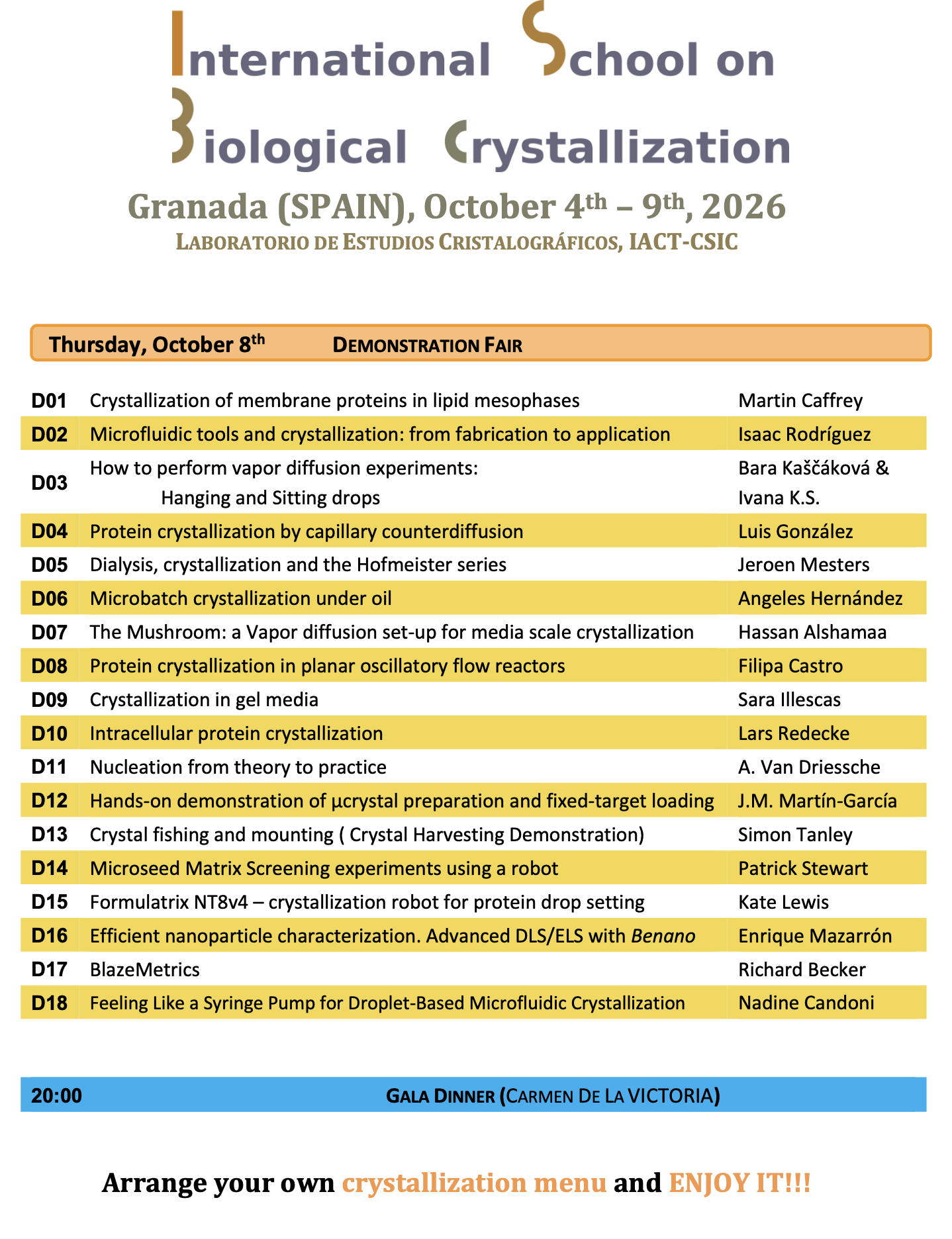
Practical training during ISBC2026 will be organized in our innovative and lively format we call Demonstration Fair.
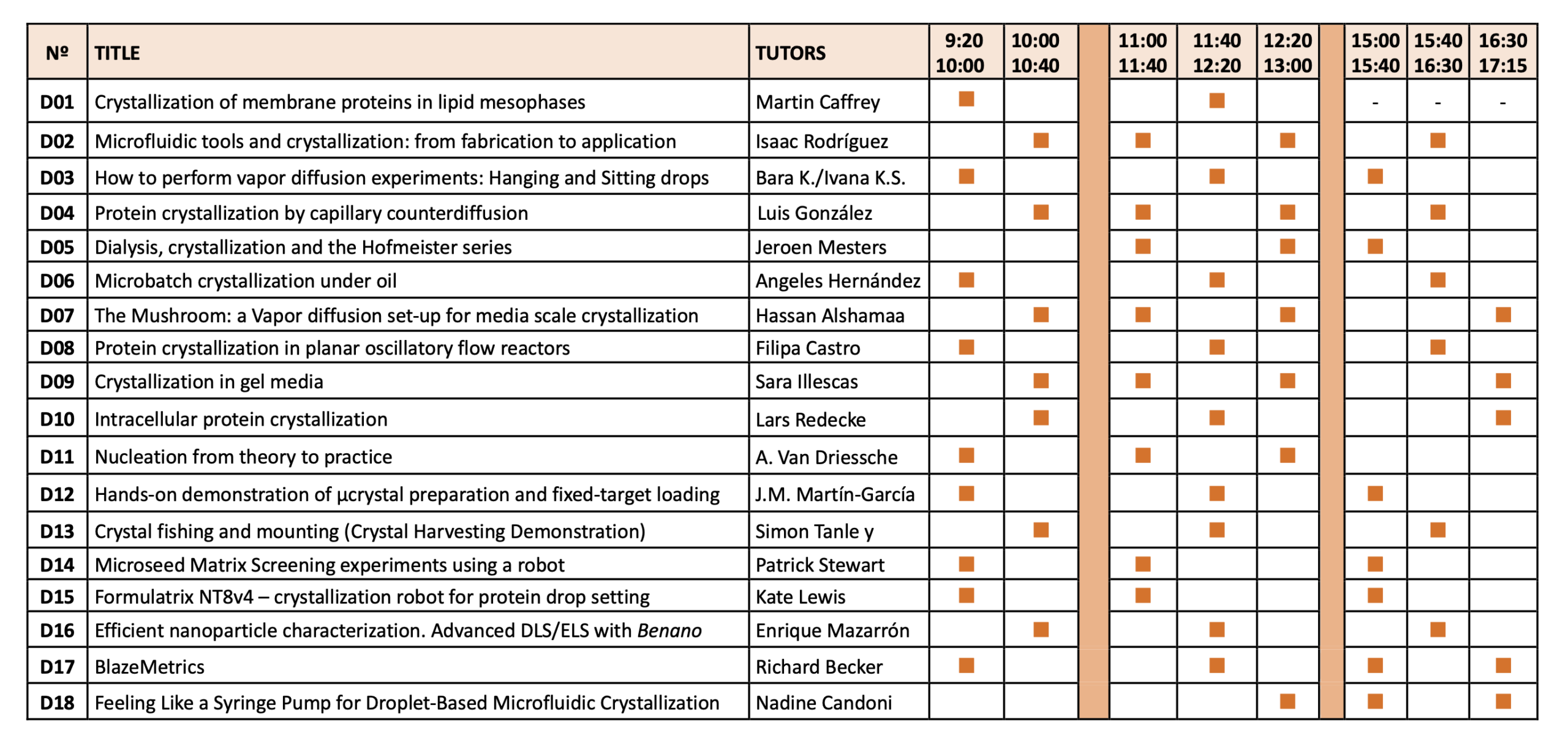
A number of stands will simultaneously offer the opportunity of attending short (15-30 minutes) practical sessions carried by specialists periodically at scheduled times.
Participants can choose which sessions they want to attend and in what order they will do it. Of course they can also change their schedule on the fly if their next selected session is too busy at the time they selected, if they want to repeat a specially interesting one, or if they change their mind in any other direction.
So make your own crystallization menu and ENJOY!
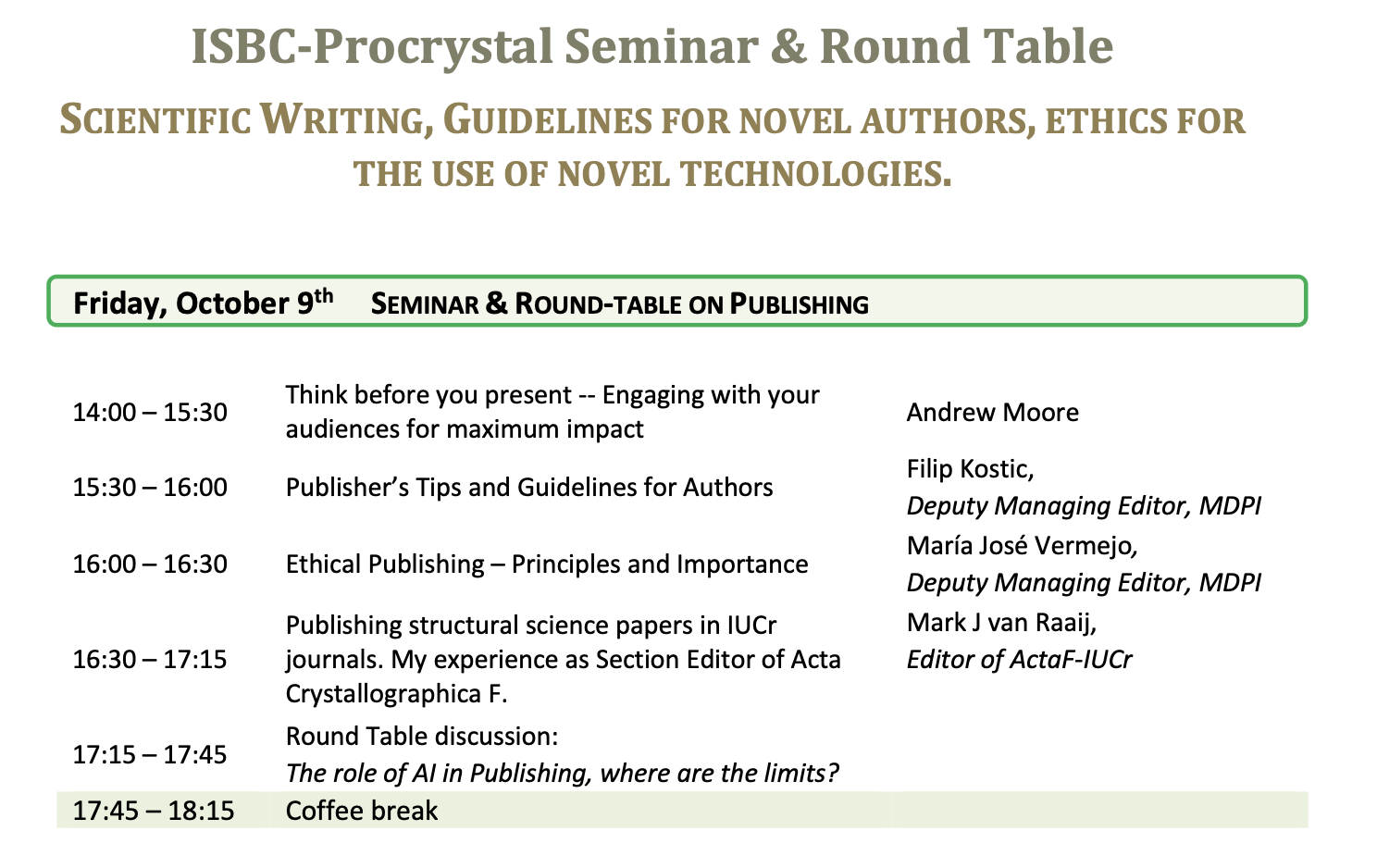
ISBC-Procrystal Seminar & Round Table
As part of the EU-funded PROCRYSTAL project, we are organising a special afternoon session dedicated to the challenges and opportunities of scientific communication in the rapidly evolving research landscape.
The session will explore best practices for scientific presentation and writing, with a particular focus on practical guidelines for early-career and emerging authors. It will also address the ethical use of new and emerging technologies in research and scientific communication, providing a space to reflect on responsible practices and current challenges.
The afternoon will conclude with an open round-table discussion:
“The Role of AI in Publishing: Where Are the Limits?”
This final discussion will bring together different perspectives on the growing role of artificial intelligence in scientific publishing, addressing questions around authorship, transparency, integrity, responsibility, and the appropriate use of AI-assisted tools in the publication process.